

The New Resource Frontier: Unlocking Central Asia’s Critical Minerals Powerhouse
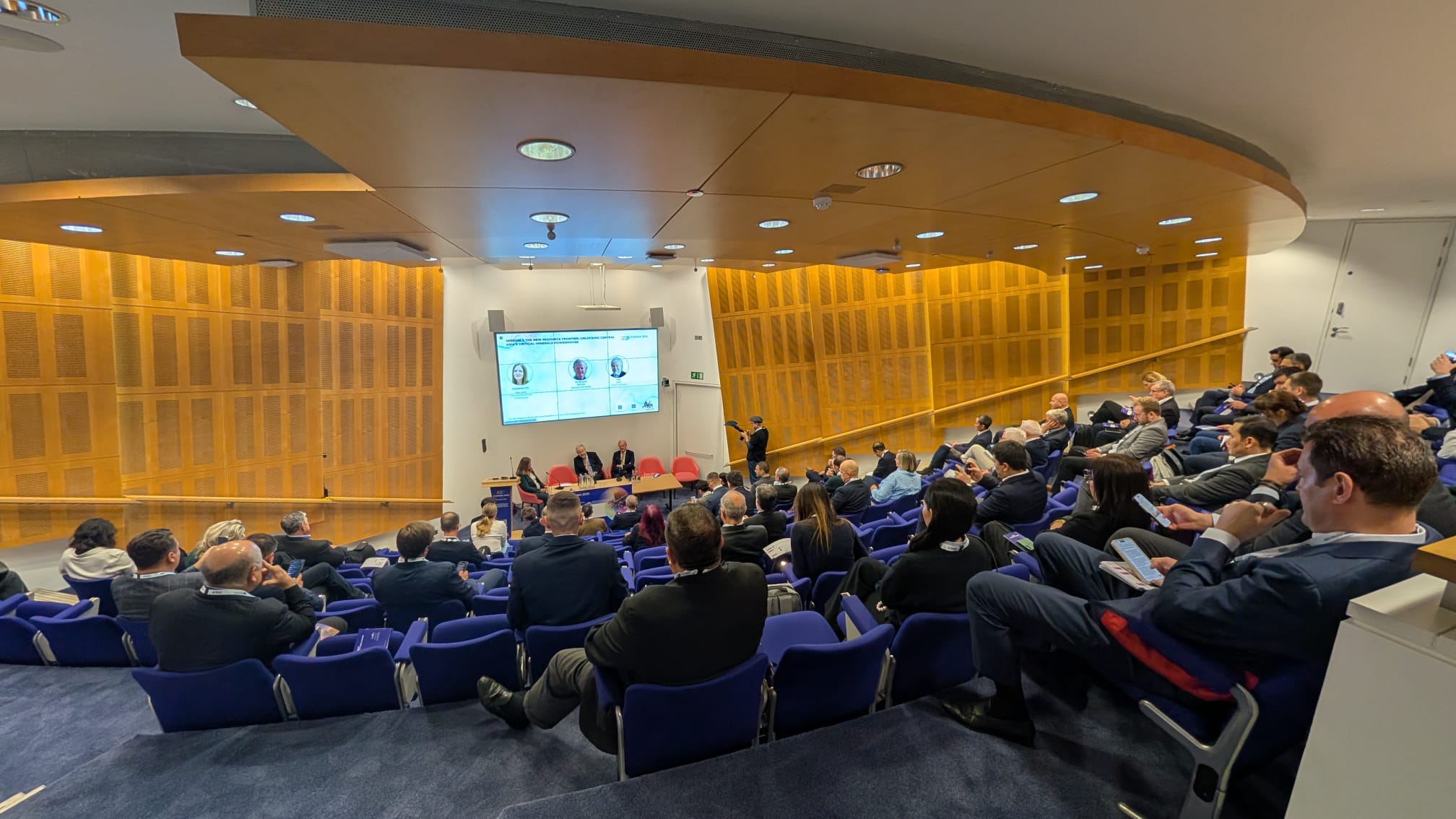
The opening session “The New Resource Frontier: Unlocking Central Asia’s Critical Minerals Powerhouse” at MINEX EURASIA 2025 set out a clear message: Central Asia is moving from geological promise to a contested, strategic hub in the global race for critical raw materials, but finance, governance and patient project development still lag behind the rhetoric. The speakers framed the region as both a major opportunity for investors and governments, and a test case for whether new supply chains can be built on higher environmental, social and governance standards rather than on geology alone.
Setting the scene: promise and underinvestment
The session opened with a reminder that Central Asia sits on world‑class deposits of lithium, tungsten, rare earths and other critical minerals hosted in major metallogenic belts stretching from Eastern Europe into China. Kazakhstan alone, the ninth‑largest country by area with one of the world’s lowest population densities, embodies this combination of scale, sparse settlement and rich geology. Yet despite this endowment, exploration spending in Central Asia remains modest compared with peer regions, and the number of Western exploration and development companies active on the ground is strikingly low.
Using historical exploration data, the opening speaker underlined that Kazakhstan still dominates regional exploration budgets but sits far below traditional mining jurisdictions when benchmarked internationally. The point was not to question the geological potential but to highlight a persistent investment gap and to ask why more junior and mid‑tier companies are not entering or partnering with the many capable local firms already operating in Kazakhstan, Uzbekistan and neighbouring states. The audience heard that while there are standout projects, such as a recently advanced vanadium feasibility study in southern Kazakhstan, these remain exceptions in a landscape where far more risk capital is needed to convert maps into mines.
Time, risk and the reality of project development
A second theme was the mismatch between political expectations and the realities of mine development timelines. Participants were reminded that moving from grassroots exploration to production is a multi‑stage, high‑attrition process: for every project that reaches construction, many fall away due to technical, economic or permitting barriers. Exploration, feasibility work and environmental and social assessment are all costly and time‑consuming, and the global average time from discovery to production has stretched from around 15 years to more than 16 years in recent datasets. Central Asia is not immune to these global trends, even if the region’s geology appears “easy” on maps.
Speakers warned against the illusion that attractive maps and belts translate into quick wins, stressing that governments, investors and communities must be prepared for long‑term engagement. That, in turn, puts a premium on stable rules of the game and predictable permitting frameworks. The discussion linked the slow pace of project maturation to investor hesitation: if regulations, land access and environmental requirements are unclear or shifting, the long payback periods typical of mining become harder to justify, even in geologically rich terrain.
Governance reforms: it’s not all about geology
Several contributors emphasised that Central Asia’s emerging critical minerals story is increasingly a governance story. Kazakhstan was highlighted as a regional leader in modernising its mining framework: adoption of an international‑style reporting code (KAZRC), the creation of a national register of qualified experts, development of a mineral cadastre, and reforms to the subsoil and environmental codes. The shift towards “best available techniques” and away from “pay to pollute” approaches is starting to embed lower‑impact, more resource‑efficient mining practices into project design.
These reforms are still evolving, but they signal to investors that rules are becoming more transparent and aligned with international standards. The message from the panel was that other Central Asian states do not need to reinvent the wheel: Uzbekistan’s new mining code and recent joint geological initiatives with Kazakhstan, including cooperation on rare earths and other critical minerals, were cited as examples of regional learning in action. The overarching argument was that geology unlocks interest, but modern, enforceable governance frameworks unlock capital at scale.
Competing strategies: Kazakhstan and Uzbekistan
The session contrasted how Kazakhstan and Uzbekistan are structuring their critical raw material strategies. In Kazakhstan, authorities initially hoped that clear long‑term potential would be enough to draw private domestic and foreign mining groups into critical minerals, but investors largely prioritised better understood copper and gold projects. A government “Comprehensive Plan” for rare and rare earth metals for 2024–2028, backed by relatively modest public funding, did little to shift that calculus. In response, the Development Bank of Kazakhstan has announced a multi‑year, billion‑dollar financing programme targeting extraction and processing of rare earths and critical minerals, explicitly accepting that the state will have to play a leading role in the next phase.
Uzbekistan, by contrast, has moved faster to build an integrated, state‑anchored model. A dedicated state‑owned critical raw materials company, TMK (Uzbekistan Technological Metals Company), has been tasked with developing more than 100 investment projects across 25 strategic metals and minerals. By 2030, Uzbekistan aims to discover scores of new deposits, including tungsten, lithium, graphite, vanadium and titanium, and to massively scale tungsten mining and processing, with flagship projects such as the Sarakool deposit and an on‑site processing plant designed to serve both domestic users and global markets. This approach is explicitly built around upstream, midstream and downstream integration, using the state as a central partner for foreign investors rather than leaving the sector’s development to the private market alone.
Local value creation and industrial policy
Across both countries, the discussion highlighted a shift from simply exporting concentrates to capturing more value in‑country. Kazakhstan has identified four priority industrial uses for its critical raw materials: semiconductors, batteries, heat‑resistant alloys and permanent magnets. Existing plants, such as the Ulba Metallurgical Plant producing high‑end alloys, and new ventures processing battery‑grade manganese sulfate and graphite, are intended to seed domestic industries in batteries, electric vehicles, magnets, aerospace components, medical devices and renewable energy equipment.
Uzbekistan’s TMK strategy similarly couples mining projects with processing plants and technology parks, positioning critical minerals as feedstock for broader industrialisation. Many of the high‑profile joint ventures are with Chinese state‑owned or large private mining, technology and engineering firms, which bring capital, processing technology and turnkey project delivery capabilities. These partnerships cover tungsten, molybdenum, nickel and other metals, and include plans for hydrometallurgical facilities, waste reprocessing and even joint development of energy storage systems. The panel noted that such deals can accelerate industrial build‑out but also deepen dependencies if governance and benefit‑sharing are not carefully managed.
Geopolitics: a crowded chessboard
Speakers framed 2025 as an inflection point in the global race for Central Asia’s critical raw materials. China still enjoys significant structural advantages: long‑term strategic planning, the Belt and Road infrastructure backbone, turnkey engineering and construction capacity, and the ability to mobilise large, patient pools of capital. Chinese entities already dominate many rare earth and tungsten joint ventures in the region and are deeply embedded in local supply chains.
However, other players are now asserting themselves more forcefully. The United States has moved beyond its traditional focus on hydrocarbons to seek offtake‑focused critical mineral deals underpinning both civilian and defence industries. Its approach is often more transactional, favouring secure supply over localised manufacturing, which can limit host‑country benefits to export revenues. The European Union is pursuing strategic partnerships that bundle moderate finance with technical assistance on exploration, ESG and technology transfer, but faces constraints on the sheer scale and speed of investment and risks being outcompeted by China and the US. Meanwhile, South Korea, Japan, Türkiye and the UK are positioning themselves as niche partners offering technology, standards and specialised services rather than dominating capital.
OECD and UK: standards, finance and partnerships
The OECD contribution to the session stressed that unlocking Central Asia’s minerals must go hand in hand with addressing governance, environmental and social risks. Its horizontal work programme on critical minerals in Central Asia focuses on three pillars: responsible business conduct and supply‑chain‑wide due diligence; environmental risk management and decarbonisation of mining, including water and waste; and tax and transfer pricing policies to ensure that a fair share of value remains in producer countries. Through regional dialogues and country‑level workshops in Kazakhstan, Kyrgyzstan and Uzbekistan, the OECD is working with governments to implement standards that can reduce corruption, illicit financial flows and environmental harm, and to produce a set of concrete policy recommendations scheduled for release in 2026.
The UK presentation underlined London’s ambition to be a key partner in this transformation. A new UK critical minerals strategy directly links mineral demand to eight priority growth sectors and emphasises building resilient, diversified supply chains through international partnerships. Existing and forthcoming memoranda of understanding on critical minerals with Kazakhstan, Uzbekistan, Mongolia and Kyrgyzstan provide a political framework, while UK export finance tools are being adapted to support early‑stage project work and de‑risk responsible investment in overseas critical mineral projects that can supply UK industry. Case studies of UK companies already active in Central Asia—ranging from copper producers deploying renewable power to consultancies managing legacy mine waste and engineering firms supported by UK export credit—were used to illustrate how British expertise can span the full mine lifecycle, from exploration through rehabilitation.
Conclusion: from optimism to execution
The session closed on a deliberately optimistic note. Central Asia’s critical minerals endowment, combined with active reform in countries such as Kazakhstan and Uzbekistan and growing geopolitical attention from China, the US, the EU and the UK, creates a rare window to reshape global supply chains. Yet the speakers were clear that success will depend on more than geology and high‑level communiqués. It will require sustained exploration spending, realistic timelines, investor‑friendly but robust governance, and partnership models that balance foreign capital, local industrialisation and environmental responsibility. The message to the MINEX EURASIA audience was that the region has moved firmly onto the world’s critical minerals map; the challenge now is to turn that visibility into durable, sustainable projects that deliver for both global markets and local societies.