London
1 December 2025
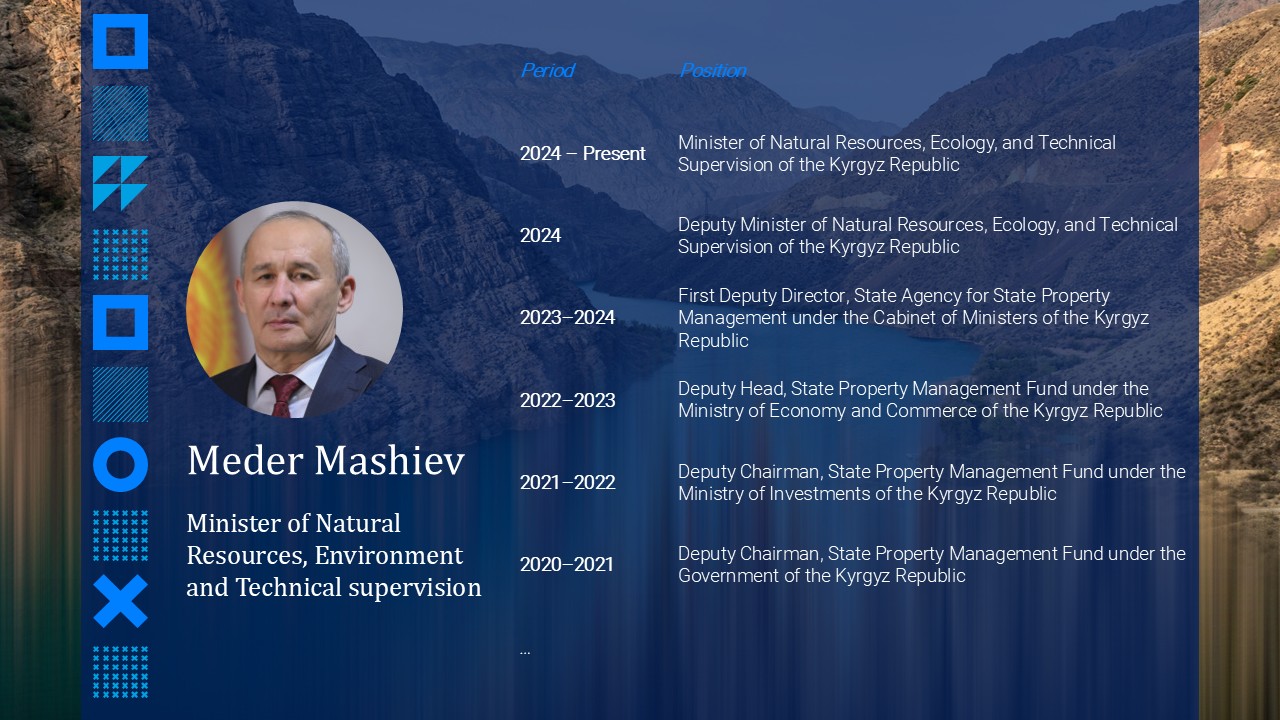
Slide 1. Dear participants, colleagues, ladies and gentlemen!
My name is Meder Asanovich Mashiev,
I am the Minister of Natural Resources, Ecology and Technical Supervision of the Kyrgyz Republic — the authorized state body responsible for geology and subsoil use.
On behalf of the Ministry of Natural Resources, Ecology and Technical Supervision of the Kyrgyz Republic, I am pleased to welcome all participants of the international forum MINEX Eurasia 2025.
The MINEX format has proven to be an effective platform for discussing the state and development trends of the global mineral resources and metals market, as well as the prospects for its further growth. Experience from previous years has shown that MINEX serves as a venue for dialogue between mining industry professionals and international investors. It is a place where new ideas emerge, partnerships are formed, and important decisions are made that help advance the sector. The platform also supports the exchange of experience, the strengthening of partnerships and discussions on the future of the mining industry, with a particular focus on the critical minerals segment in a global context.
I wish all participants productive work, constructive discussions and success in achieving the goals you have set.
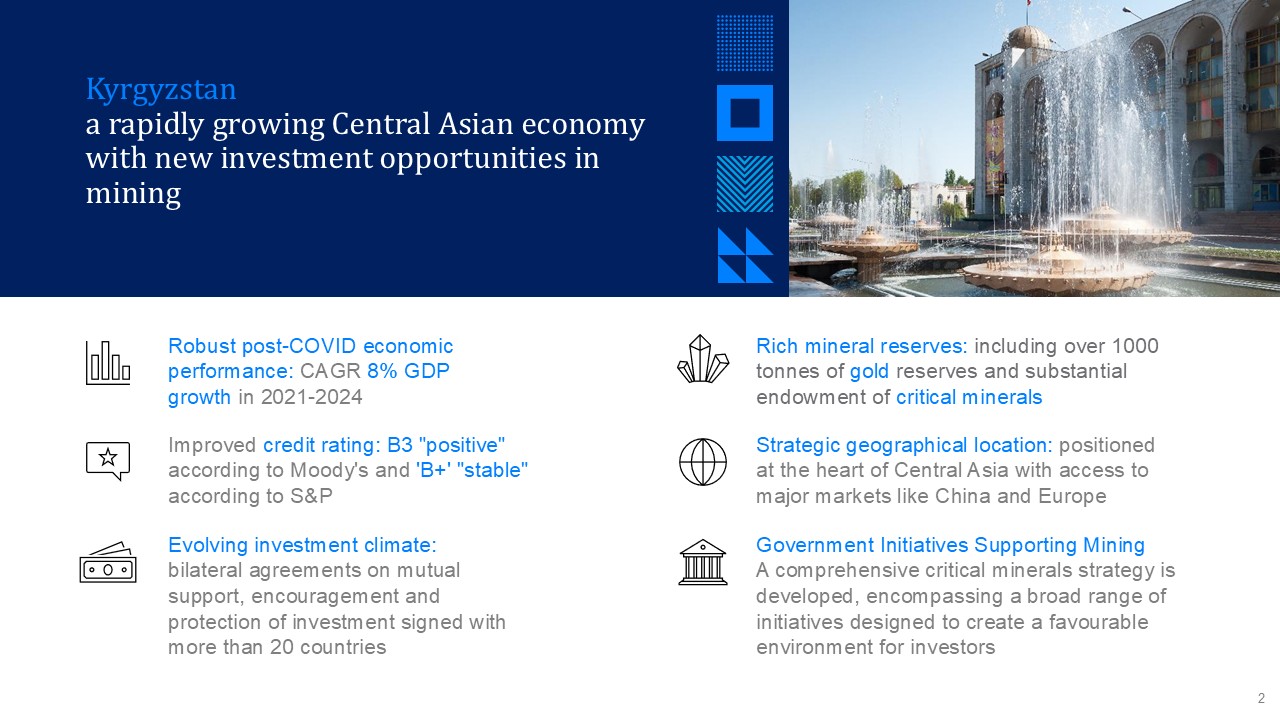
Slide 2. The development of the mining industry is one of the strategic priorities for the Kyrgyz Republic.
Our country, as one of the regional leaders in mineral reserves, has substantial mineral resource potential, which makes the growth of the mining sector particularly important for the national economy.
Thanks to many years of work and the high professionalism of several generations of Kyrgyz geologists, more than 1,000 deposits and occurrences of various mineral resources have been identified.
Around 200 of these deposits have been examined in detail through geological exploration. They include deposits of precious, non-ferrous, rare-earth and ferrous metals that have gained significant economic importance amid the rapid expansion of global industry and rising demand for strategic resources.
The Kyrgyz Republic is endowed with rich and diverse mineral reserves that play a key role in the development of the national economy.
The main types of mineral resources include:
- gold and silver,
- copper, tin, mercury and antimony,
- rare-earth elements and tungsten,
- and, underground fresh and mineral waters, coal and non-metallic minerals.
This wide range of mineral resources creates strong potential for the continued sustainable development of the mining sector and for attracting investment into exploration and processing.
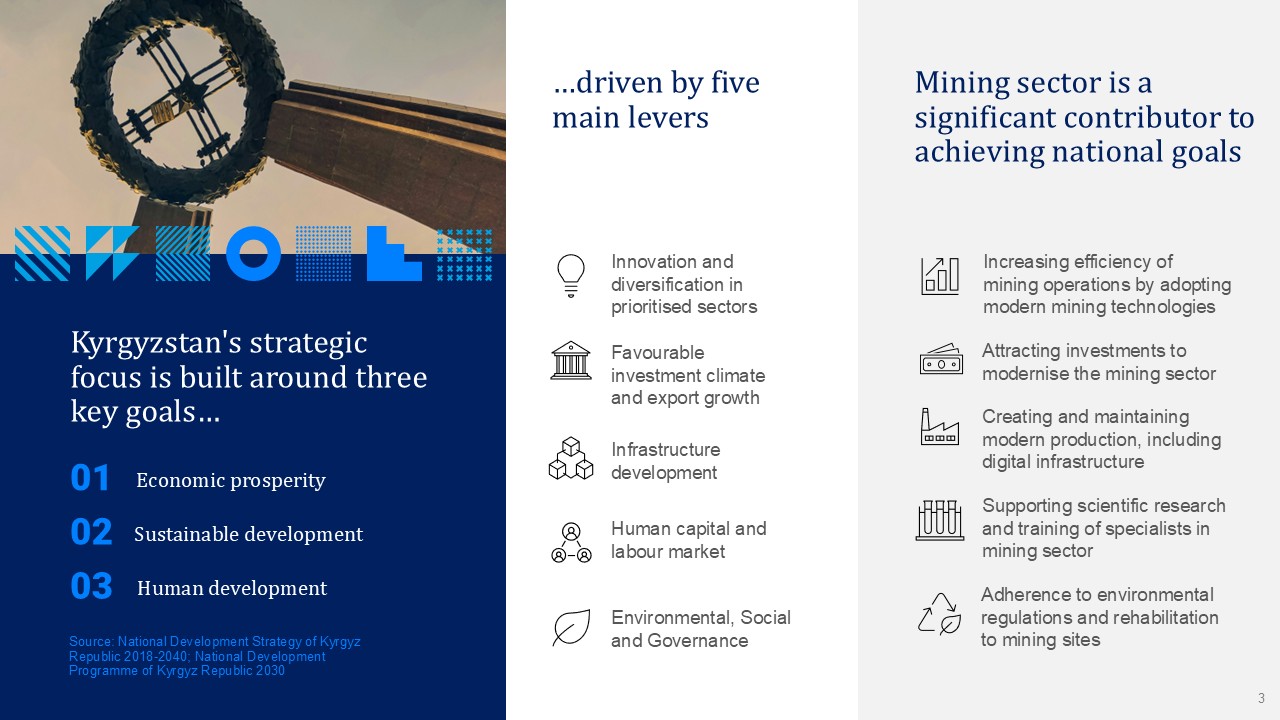
Slide 3. Critical minerals are strategic resources that play a central role in the development of the modern economy and advanced technologies.
They are highly important for industry yet vulnerable due to limited reserves, the geographic concentration of production and the risk of disruptions in supply chains.
Critical minerals are essential for low-carbon and green technologies, including:
- solar panels,
- wind turbines,
- electric vehicles,
- energy-efficient lighting, as well as other innovative solutions.
Today, many economies are undergoing transformation driven by the need to respond to climate change and to manage natural resources more responsibly.
In this context, several priorities become particularly important:
- securing access to critical minerals,
- moving towards sustainable development models,
- integrating into global supply chains.
These processes shape new directions for international cooperation and create opportunities for sustainable economic growth based on green technologies. The Kyrgyz Republic is currently developing a Strategy for the Development of the Critical Minerals Sector, aimed at building a sustainable and competitive industry.
The Strategy focuses on:
- developing the extraction and processing of rare-earth elements;
- attracting investment and introducing innovative technologies;
- integrating economic, environmental and social considerations
(note — internationally defined as ESG – Environmental, Social and Governance, a concept emphasizing transparency in investment and technologies that enable efficient and environmentally responsible development of critical minerals)
- ensuring transparency in subsoil use and investment processes;
- minimizing environmental impacts and maximizing benefits for local communities located near mining operations.
Implementing the Strategy will create the conditions for extraction and processing critical minerals efficiently while upholding the principles of sustainability and responsible subsoil use.
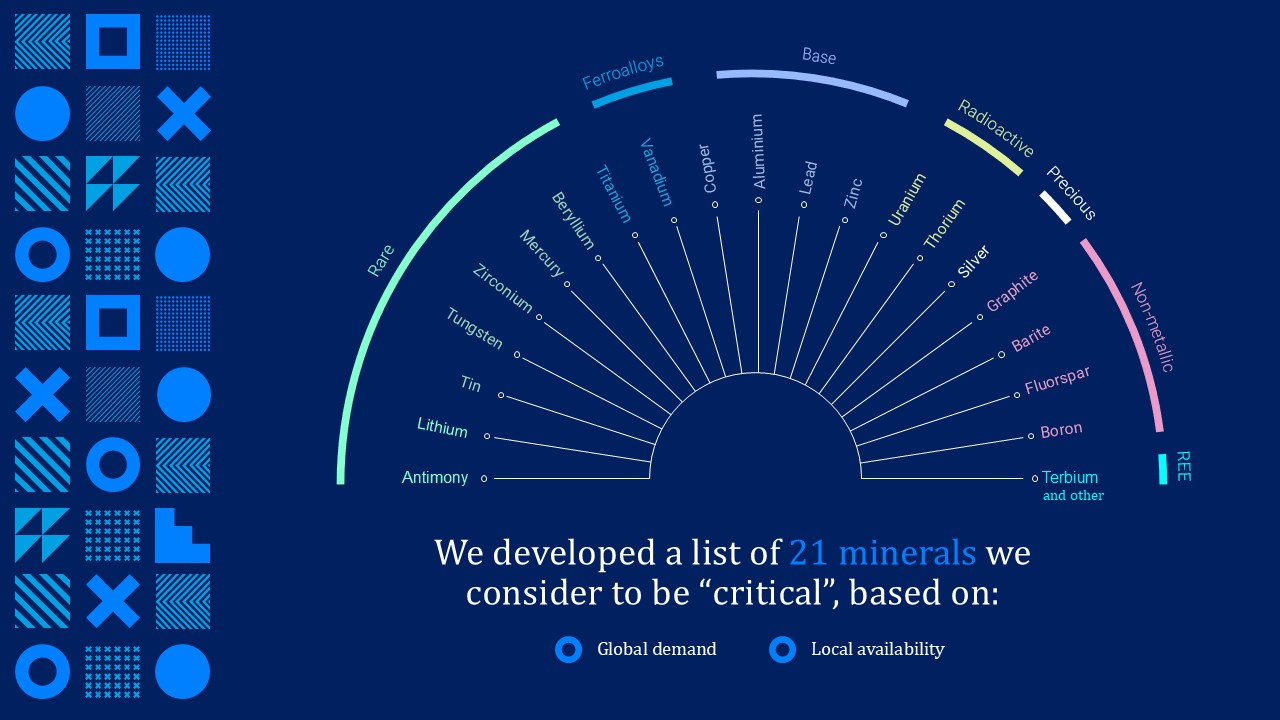
The Kyrgyz Republic’s list of critical minerals includes 21 minerals with prospective resources and metal grades.
As part of the assessment of the country’s mineral resource potential, the following were identified:
- 4 priority projects,
- 5 most promising deposits,
- 16 prospective areas for further study and development.
These sites are expected to be of significant interest to investors and international partners and have strong potential for the development of the strategic critical minerals sector.
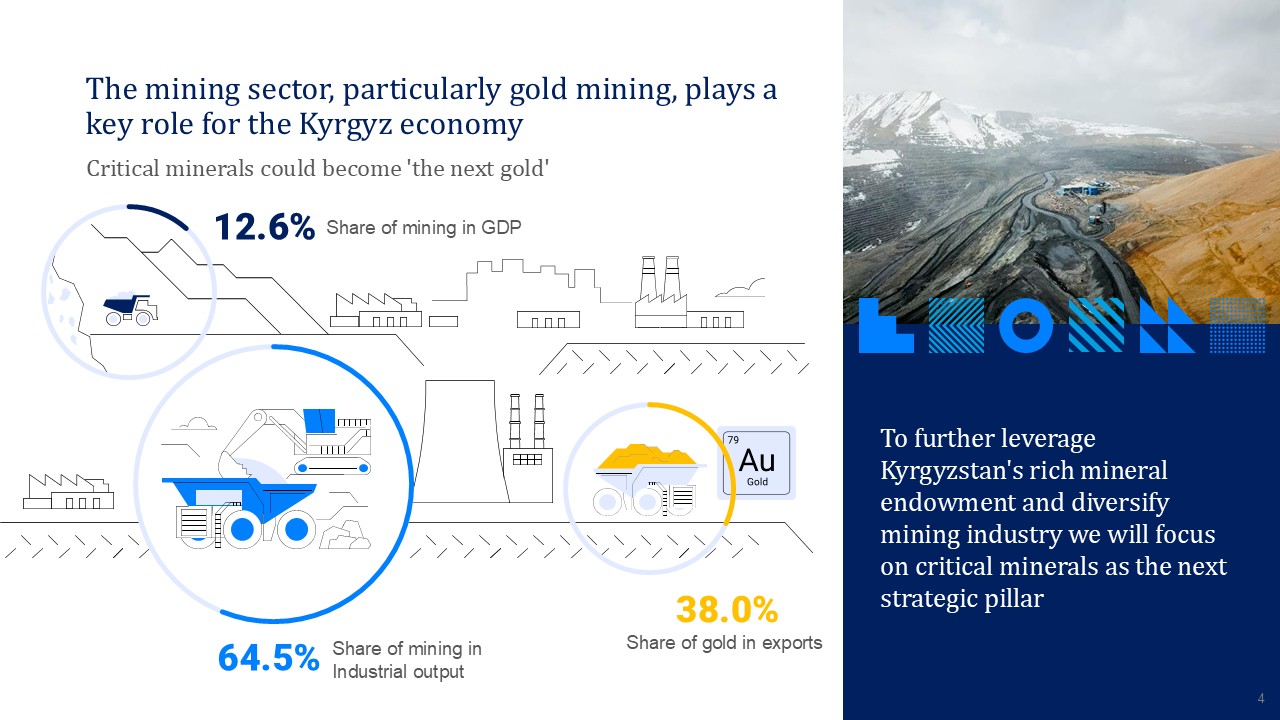
Slide 4. Formation of the Critical Minerals List
The approach used to define the list of critical minerals and to assess the resource base of the Kyrgyz Republic consisted of three steps:
- Global lists. A consolidated global list of critical minerals was prepared using nine national lists (United Kingdom, United States, European Union, Australia, China, Canada, Japan, South Korea and India), as well as the list of critical minerals published by the International Energy Agency.
- Presence in the Kyrgyz Republic. Minerals from the global list were reviewed against known mineral occurrences within the Kyrgyz Republic. Based on this assessment, a preliminary list of 33 minerals was compiled for which at least occurrences or initial signs of mineralization are present.
- Deposit size and grades. Minimum thresholds were established for deposit size and ore grade.
As a result, 21 minerals with prospective resource tonnages and ore grades were identified:
| 1. Aluminium
2. Barite 3. Beryllium 4. Boron 5. Vanadium 6. Tungsten 7. Graphite |
8. Lithium
9. Copper 10. Tin 11. Rare-earth elements 12. Mercury 13. Lead 14. Silver |
15. Antimony
16. Titanium 17. Thorium 18. Uranium 19. Fluorite 20. Zinc 21. Zirconium |
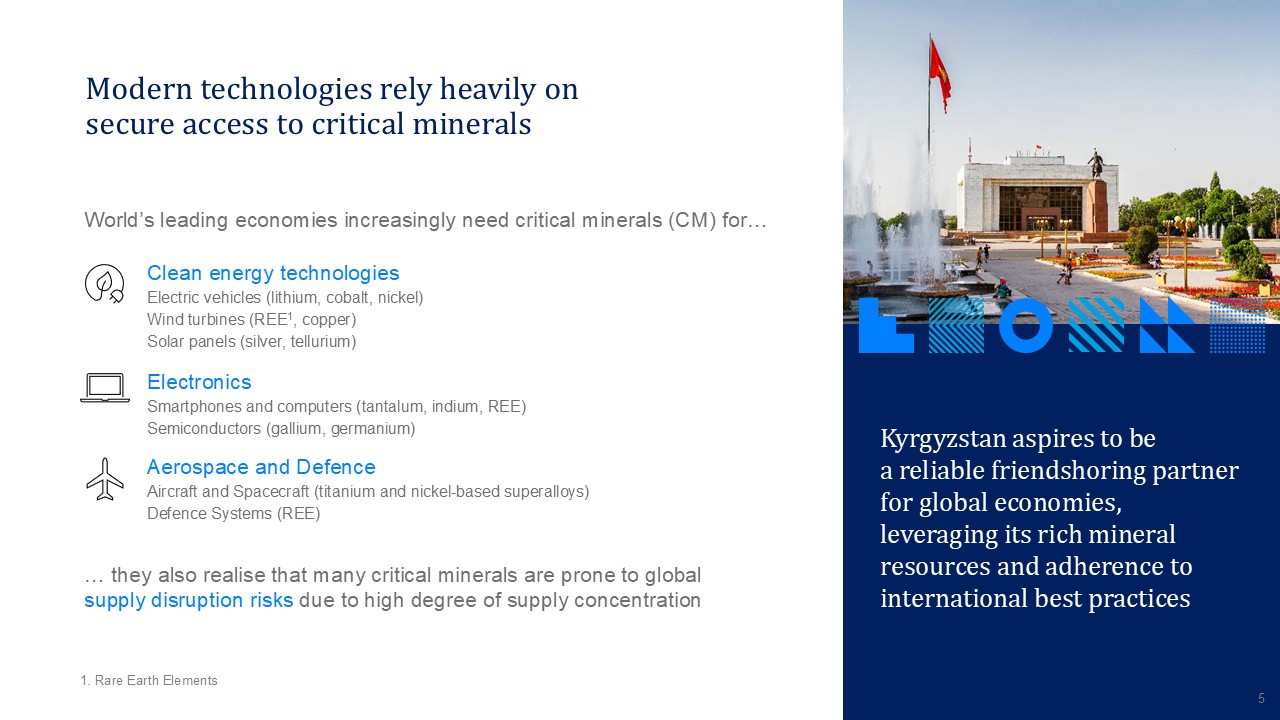
Slide 5. Rare-Earth Deposits
The Kyrgyz Republic has significant and promising rare-earth element (REE) reserves, concentrated primarily at the following deposits:
- Kutessay II and Kalesay
Project development is carried out by State Enterprise Kyrgyzgeology, which plays an active role in advancing initiatives within the critical minerals sector.
These deposits contain high grades of rare-earth elements, as well as molybdenum, bismuth, lead, zinc and silver. Their mineral composition provides a strong basis for establishing processing capacity and attracting strategic investors.
The State Enterprise Kyrgyzgeology is open to cooperation with reliable, long-term partners interested in applying modern technologies, ensuring environmental sustainability and supporting the efficient development of the Kyrgyz Republic’s mineral resource potential
Slide 6. Rare-Earth, Antimony and Polymetallic Deposits
The Kadamdzhai antimony deposit is in the Kadamdzhai district of the Batken region, within an economically developed area covered by the mining lease of the Kadamdzhai Antimony Plant. The site is currently open for investment.
Antimony reserves:
- Balance reserves (C1 + C2): 2 974.5 thousand tonnes of ore containing 77 002 tonnes of antimony.
- Off-balance reserves: 348 thousand tonnes of ore containing 6 754 tonnes of antimony.
Total antimony reserves: 83 756 tonnes.
The Kyzyl-Ompol area hosts substantial titanomagnetite ore reserves along with other mineral resources. The site includes five placer deposits:
- Bake
- Tash-Bulak
- Uzunsai
- Tyundyuk
- Ottuk
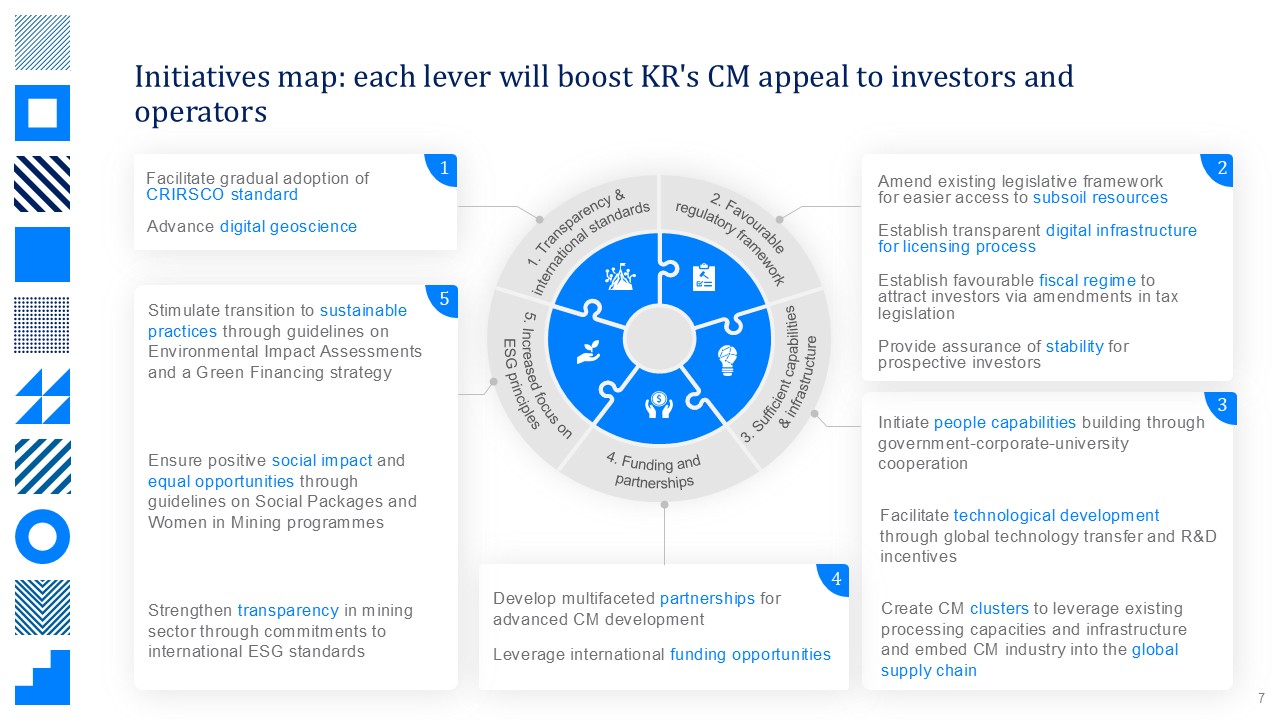
Slide 7. Five Priority Mineral Resources
Sandyk Nepheline Syenite Deposit
The deposit is located in the Jumgal district of the Naryn region and contains substantial alumina reserves:
- Chechekty area: 732 million tonnes of ore; 147 million tonnes of alumina; average grade 20.1%.
- Sandyktysu area: 117 million tonnes of ore; 20.8 million tonnes of alumina; average grade 17.8%.
- Участок Кумбель:2 million tonnes of ore; 35.8 million tonnes of alumina; average grade 19.2%.
Investment potential:
The development of the Sandyk deposit is considered most effective as part of an integrated project that includes the construction of a 1 200 MW power plant and a metallurgical complex.
Implementing this integrated project would also support the development of the Kara-Keche coal deposit and the construction of the Chaek–Balykchy railway, significantly reducing transportation costs and improving overall production efficiency.
Severny Aktash
The deposit is in the Kadamdzhai district of the Batken region, close to the Kadamdzhai Antimony Plant, which processes ore and produces concentrate. Proximity to existing processing facilities can be leveraged for future operations.
The State Enterprise Kyrgyzgeology holds a valid mining license for antimony and fluorite at this site until 2042.
The deposit contains 16 thousand tonnes of antimony, along with associated minerals including 655 thousand tonnes of fluorite and 8 tonnes of gold resources.
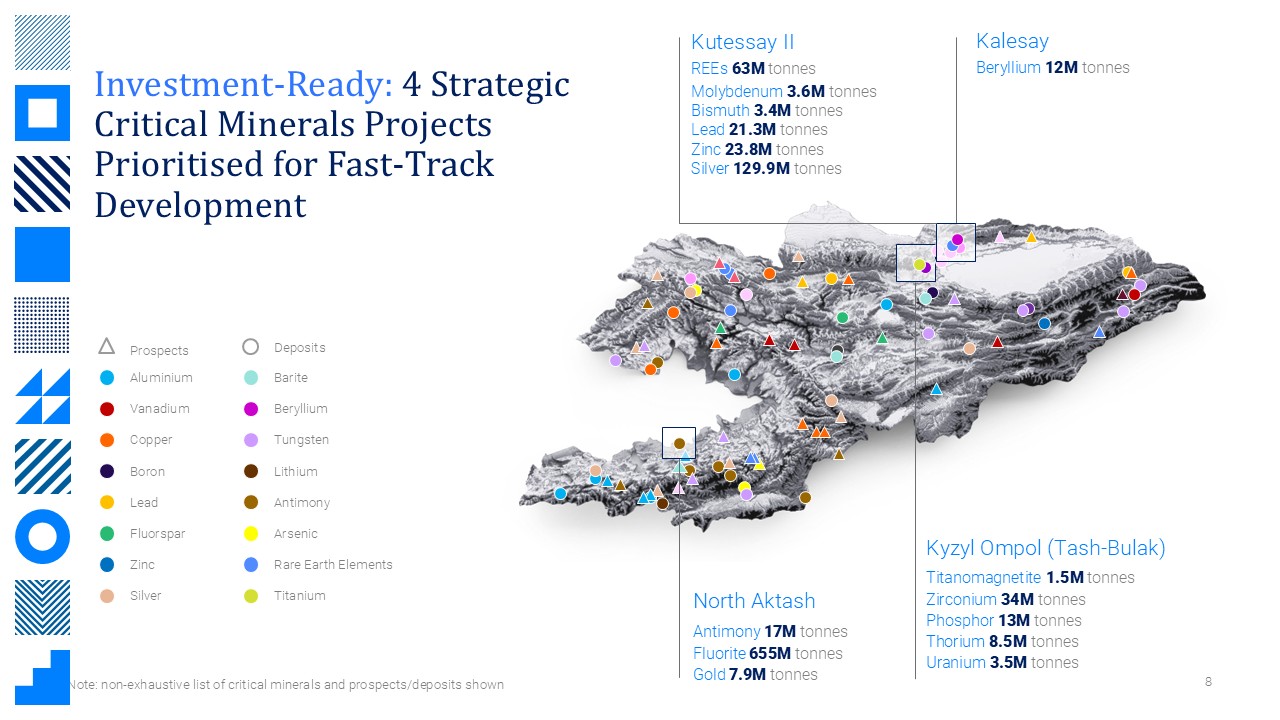
Slide 8. Five Priority Mineral Resources
Jetim Iron Ore Deposit
One of the largest iron ore deposits in Central Asia, located in the Naryn region.
The deposit contains estimated resources of 5.4 billion tonnes of iron ore with an average grade of 31.7% Fe.
Exploration work is currently being carried out by the State Enterprise Kyrgyzgeology.
The deposit is of strategic importance for the development of the national metallurgical industry and for strengthening the country’s export potential.
Uzunbulak Area (Lithium)
A prospective site in the Issyk-Kul region, open for investment. It contains occurrences of lithium, rubidium, tin, beryllium and indium. The area’s characteristics support the development of an industrial base for lithium raw material production serving the energy and electric vehicle industries.
Alumina (Aluminium) Deposits
Our country also has prospective alumina deposits open to cooperation with reliable investors:
- Zardalek: total ore reserves 680.2 million tonnes; alumina 152.3 million tonnes
- Katranbashi: total ore reserves 3 million tonnes; alumina 1.4 million tonnes
- Karangly: total ore reserves 48 million tonnes; alumina 18.7 million tonnes
These deposits have strong potential for establishing processing facilities and developing high–value-added industrial projects.
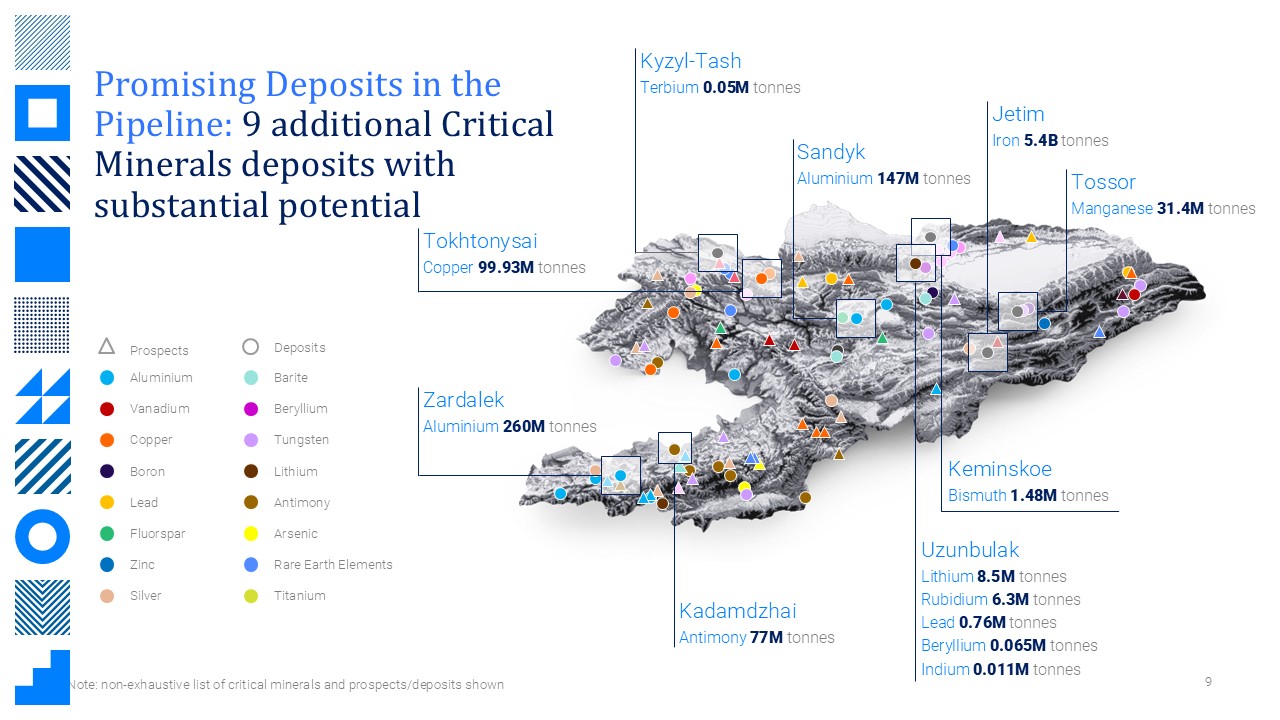
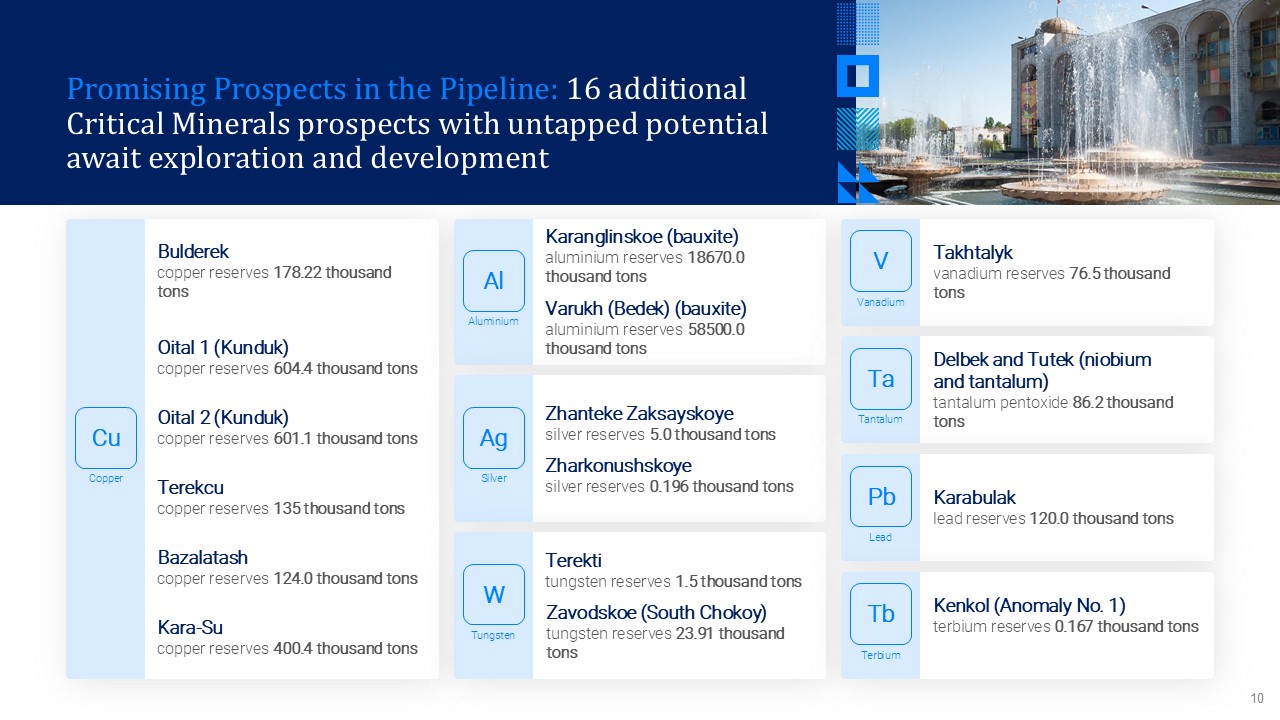
Slide 9. 16 prospective areas with estimated resources
16 prospective areas have been identified, each demonstrating strong potential for further exploration and investment:
- Delbek and Tutek (niobium and tantalum), tantalum pentoxide -86.2 thousand tonnes
- Bul’derek, copper resources – 178.22 thousand tonnes
- Zhanteke Zaksayskoye, silver resources – 5.0 thousand tonnes
- Zharkonush, silver resources – 0.196 thousand tonnes
- Karabulak, lead resources – 120.0 thousand tonnes
- Karanglynskoye (bauxite), aluminium resources – 18 670.0 thousand tonnes
- Kenkol (Anomaly No. 1), terbium resources – 0.167 thousand tonnes
- Oital-1 (Kunduk), copper resources – 604.4 thousand tonnes
- Oital-2 (Kunduk), copper resources – 601.1 thousand tonnes
- Takhtalyk, vanadium resources – 76.5 thousand tonnes; copper – 135 thousand tonnes
- Terekti, tungsten resources – 1.5 thousand tonnes
- Varukh (Bedek) (bauxite), aluminium resources – 58 500.0 thousand tonnes тонн
- Zavodskoe (Southern Chokoi), tungsten resources – 23.91 thousand tonnes
- Bazalatash, copper resources – 124.0 thousand tonnes
- Kara-Su, copper resources – 400.4 thousand tonnes
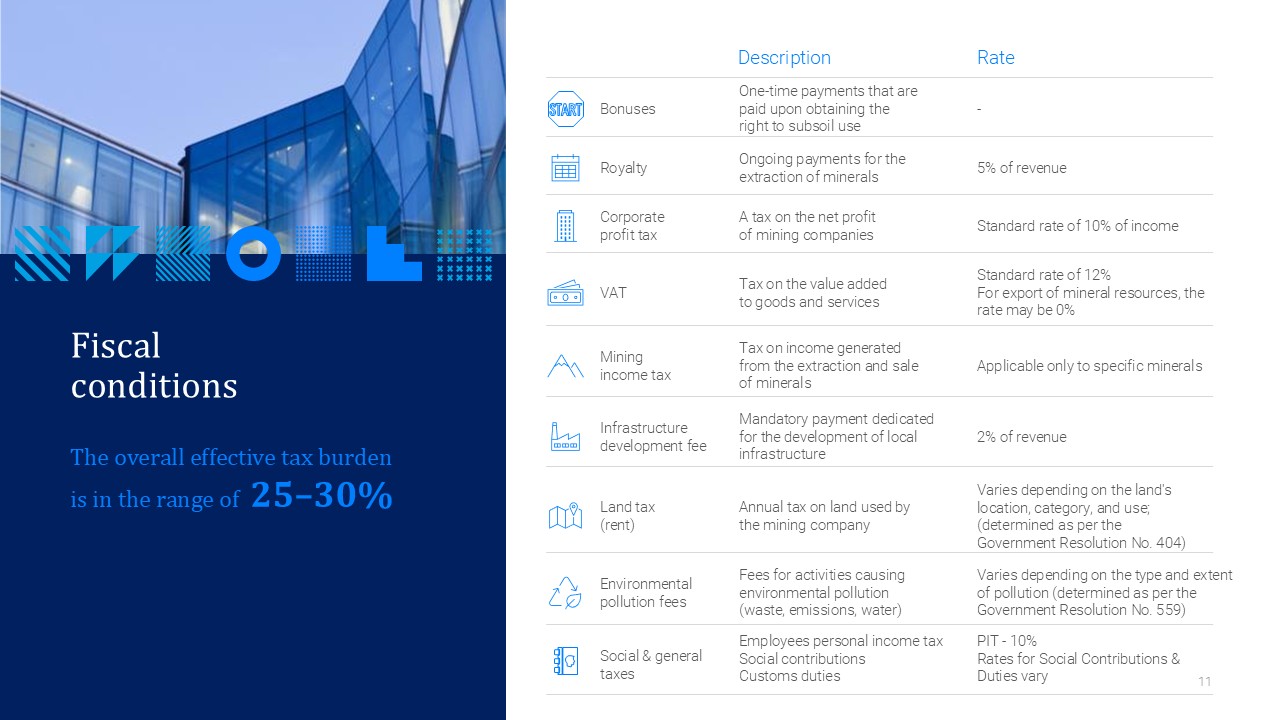
Slide 10. Taxes and Payments in the Subsoil Use Sector of the Kyrgyz Republic
- Bonuses. One-time payments are due upon obtaining subsoil use rights.
- Royalties (the primary tax for subsoil users). A regular tax applied to extracted metallic mineral resources.
- Corporate income tax. Applicable to all companies, including subsidiaries; the rate is 10% of profit. Certain large projects may operate under additional agreements.
- Value-added tax (VAT). The standard VAT rate is 12%. In the subsoil sector, VAT applies in the same way as in other industries. A 0% rate may apply to the export of mineral products.
- Social and general taxes
Subsoil users are required to pay all mandatory general contributions, including:
- Social contributions, including compulsory social insurance
- Personal income tax withheld from employees – 10%
- Environmental charges — depending on types of emissions or pollution
- Customs duties — when importing equipment
- Environmental and regulatory payments
These include:
- Fees for waste disposal
- Fees for emissions and discharges
- Fees for the use of water resources
These payments are typically calculated in accordance with established norms.
The overall effective tax burden in the mining sector averages between 25–30%.
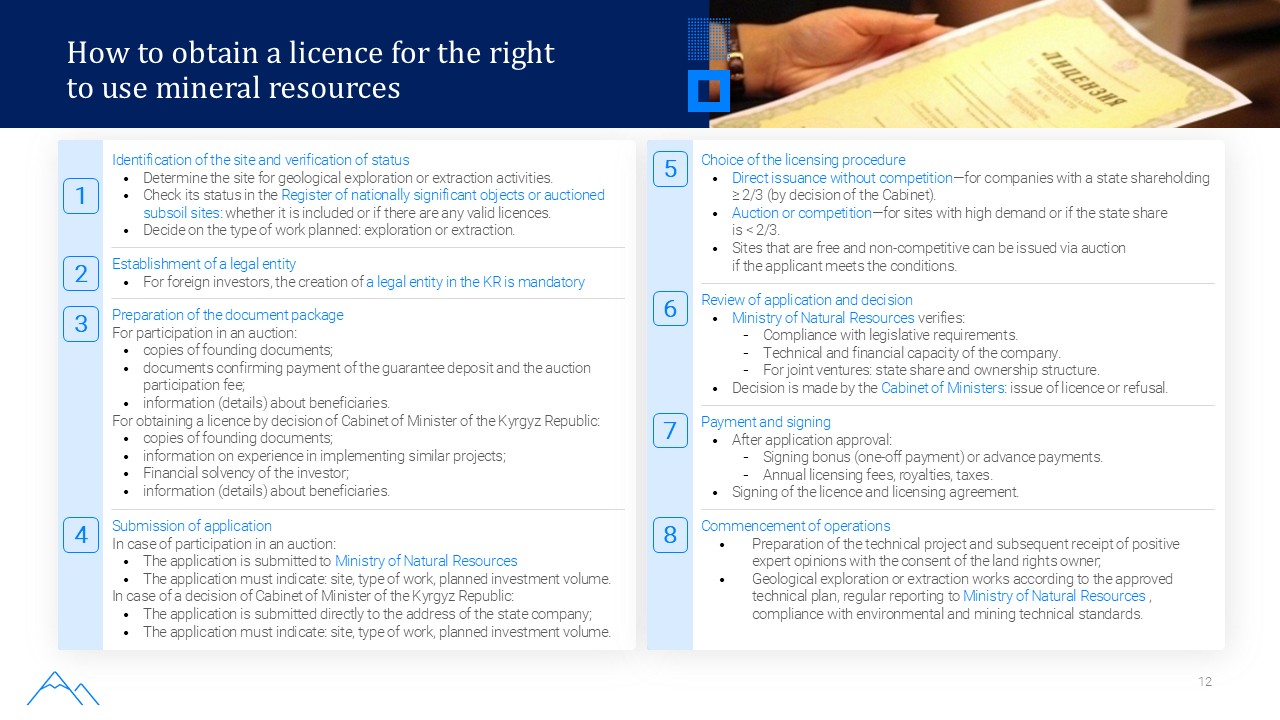
Slide 11. How to Obtain a Subsoil Use License
- Site identification and status verification:
- Identify the area intended for geological exploration or mining operations
- Verify its status in the Register of State Subsoil Sites or in the list of auctioned subsoil areas: confirm whether it is included and whether any active licenses exist
- Determine the intended type of activity: exploration or extraction
- Establishment of a legal entity. Foreign investors are required to establish a legal entity in the Kyrgyz Republic.
- Preparation of documentation
For participation in an auction:
- Copies of incorporation documents
- Proof of payment of the guarantee deposit and the auction participation fee
- Information on beneficiaries.
For obtaining a license through a decision of the Cabinet of Ministers:
- Copies of incorporation documents
- Information on the investor’s experience with similar projects
- Confirmation of the investor’s financial capacity
- Information on beneficiaries.
- Submission of the application
If participating in an auction:
The application is submitted to the Ministry of Natural Resources, Ecology and Technical Supervision of the Kyrgyz Republic (MNRETS).
The application must specify the site, the type of work and the planned investment volume.
If the license is issued via Cabinet of Ministers:
The application is submitted directly to the state-owned company;
The application must include the site, the type of work and the planned investment volume
- Selection of the licensing procedure
- Direct issuance without competition — available for companies with ≥ 2/3 state ownership (based on a Cabinet of Ministers decision).
- Auction or tender — used for high-demand sites or when the state share is < 2/3.
- Sites that are free and not subject to competitive procedures may still be auctioned if the applicant meets the established requirements.
- Application review and decision
- MNRETS assesses:
- Compliance with legal requirements.
- The company’s technical and financial capabilities.
- For joint ventures: the state share and ownership structure.
The Cabinet of Ministers issues the final decision: granting the license or denying the application.
- Payments and signing
Once the application is approved:
- A bonus (one-time) or advance payments are made
- Annual license fees, royalties and taxes become applicable
- The license and the license agreement are signed
Commencement of operations
- Development of a technical project and subsequent approval through required expert evaluations, including consent from land rights holders;
- Geological exploration or mining activities carried out in accordance with the approved technical plan, submission of regular reports to MNRETS and compliance with environmental and mining safety standards.
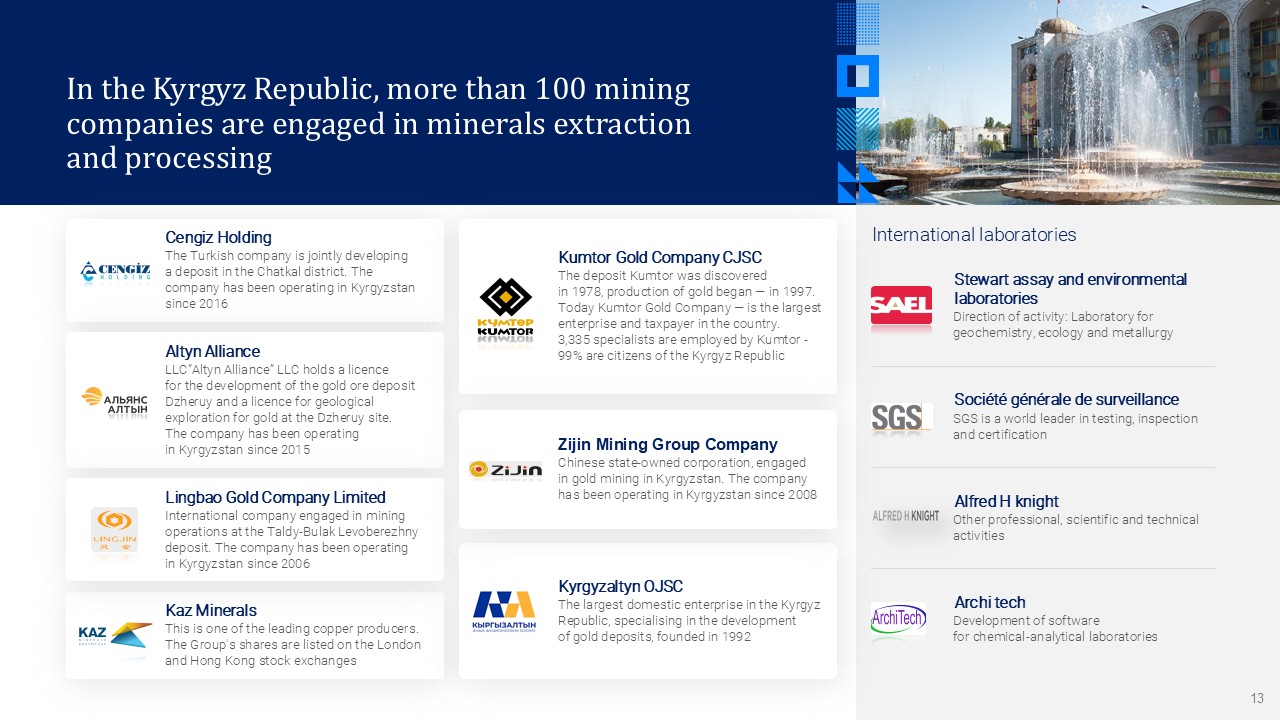
Slide 12. Major Ongoing Mining Projects
More than 100 mining enterprises operate in the Kyrgyz Republic, including major international and domestic companies:
Alliance Altyn LLC — operator of the Jerooy gold project, KAZ Minerals LLC, Kyrgyzaltyn OJSC, Kumtor Gold Company CJSC— gold reserves at the Kumtor and Togolok deposits exceed 400 tonnes
International companies present in the country include: Chaarat Gold, Lingbao Gold, Cengiz Holding, Zijin Mining Group
World-class laboratories operating in Kyrgyzstan: SGS, Alfred H. Knight, Stewart, Archi Tech.
This demonstrates the strong long-term investment appeal of the Kyrgyz Republic.
Slide 13. Conclusion
Dear guests!
We invite you to active cooperation and to the joint implementation of investment projects in the Kyrgyz Republic.
The Ministry of Natural Resources, Ecology and Technical Supervision is ready to provide comprehensive support at every stage of project implementation and to ensure the most comfortable, safe and transparent conditions for investors.
Kyrgyzstan possesses substantial natural resources, strong geological potential and favorable opportunities for investment in the mining sector.
I wish you success, productive discussions and new opportunities as part of our cooperation!
Welcome to the Kyrgyz Republic!